4 posts tagged with "Materialized Lake Views"

MLV design, fallback truth, and migration notes.

View All Tags

SCD2 is a product question: point-in-time deployed state with MLVs

· 6 min read
Sai Prudhvi Neelakantam
Senior Consultant, Data Engineering & AI at Evidi

Current-state dimensions lie the moment a device moves. Dashboards that say "where is it now" are fine for operations. History questions ("where was it when the alarm fired?") need slowly changing dimension type 2, not a hope that someone kept yesterday's extract.

For measuring points and similar deployed assets, I put location and classification history in SCD2 Materialized Lake Views before anyone builds "devices as of" pages. The change feed is the source of truth. The MLV is the productized history contract.
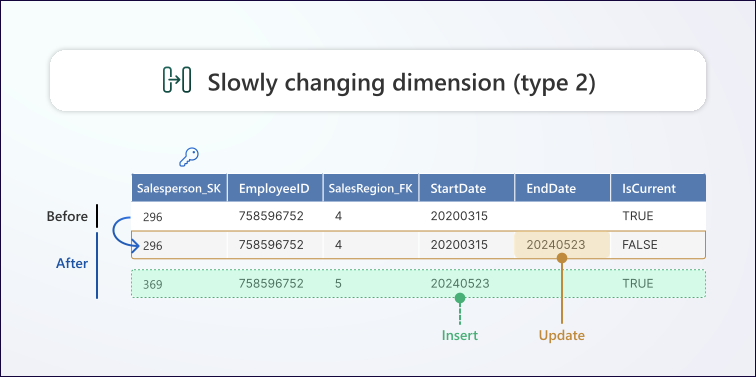
Slowly changing dimension type 2 diagram

Figure 1. Point-in-time placement is an SCD2 product question. Model effective dating before you ask dashboards to invent history. Source: Microsoft Learn: dimensional modeling dimension tables.
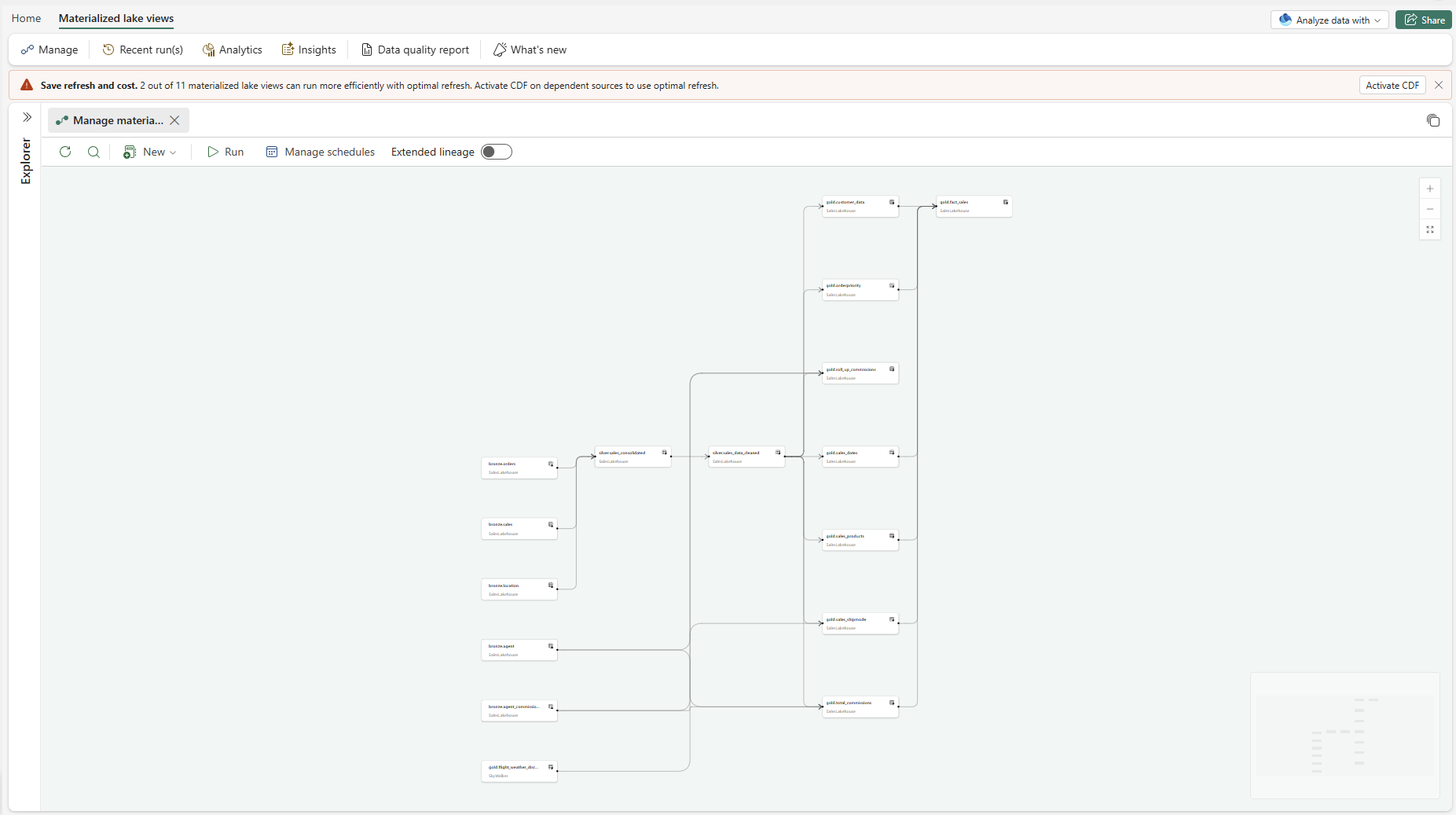
Materialized lake view lineage sample

Figure 2. MLVs make history transforms operable. Lineage shows which change feed feeds the point-in-time contract. Source: Microsoft Learn: get started with materialized lake views.
Row counts lie: validate MLVs column by column

· 6 min read
Sai Prudhvi Neelakantam
Senior Consultant, Data Engineering & AI at Evidi

A migration checklist that only compares row counts will greenlight wrong money, wrong dates, and wrong statuses. Row counts catch catastrophic drops. They miss the quiet CAST that turns decimals into floats, the null that became empty string, and the column that silently defaulted.

Push MLV cutovers to per-column tables and type-aware aggregates. Borrow the tiered reconciliation classical data migrations already trust: rows, then keys, then column aggregates. Automate it. Treat the artifacts as release evidence, not as a screenshot buried in chat.

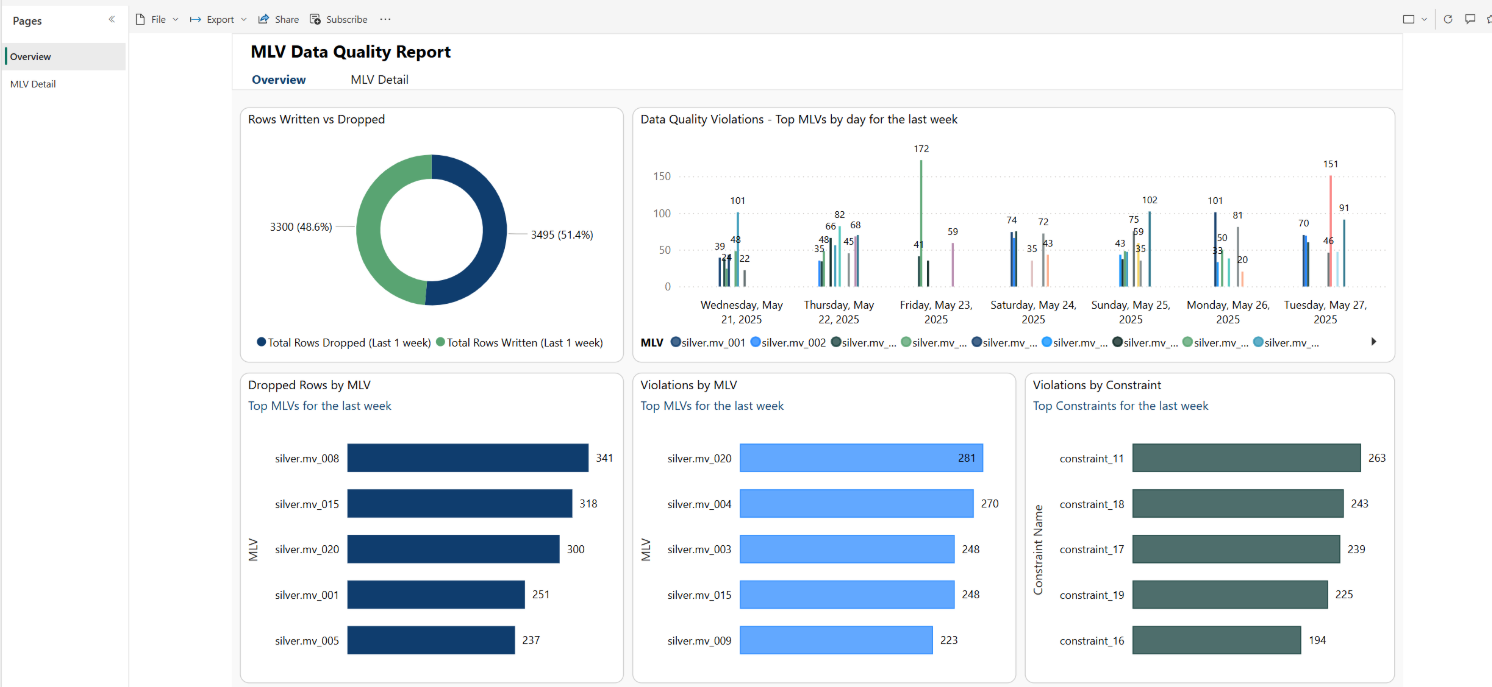
Materialized lake view data quality overview

Figure 1. Row counts catch catastrophes. Column aggregates and quality reports catch the quiet CAST that breaks money. Source: Microsoft Learn: MLV data quality reports.

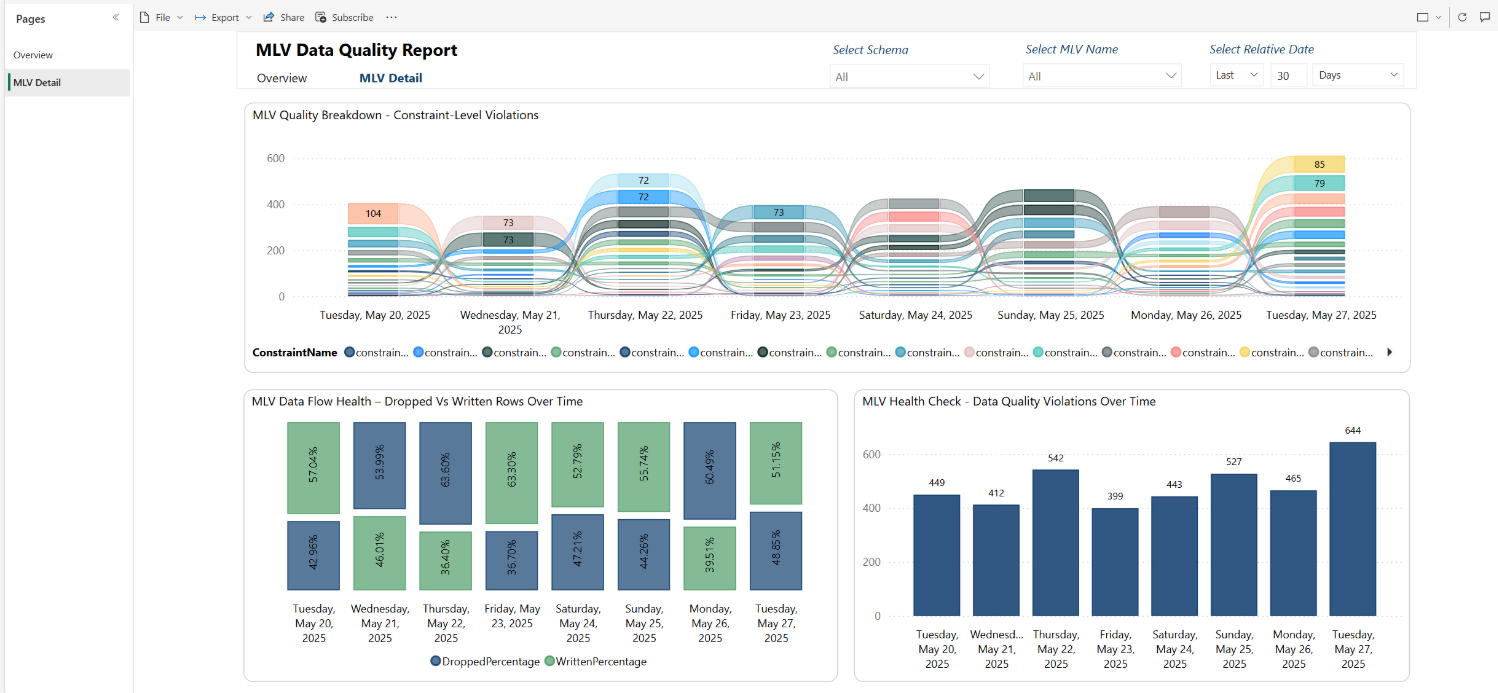
Materialized lake view detail page

Figure 2. Treat per-column reconciliation artifacts as release evidence for MLV cutovers, not optional notebook scratch. Source: Microsoft Learn: MLV data quality reports.

Most NEE warnings are noise: measure real MLV wall-clock

· 5 min read
Sai Prudhvi Neelakantam
Senior Consultant, Data Engineering & AI at Evidi

Materialized Lake View runs paste warning floods that mention native execution engine fallbacks. Teams panic-rewrite Spark SQL to chase every line. Meanwhile the DAG's wall-clock still hides in one slow node nobody measured.

Measure first. Pasted warnings include Delta and MLV metadata internals you cannot and need not remove. Wall-clock attribution beats fear-driven rewrites. Fix the few fallbacks that move latency. Ignore the rest deliberately. Document accepted warnings so on-call does not thrash. Pair with per-view notebooks so slow nodes are isolatable.

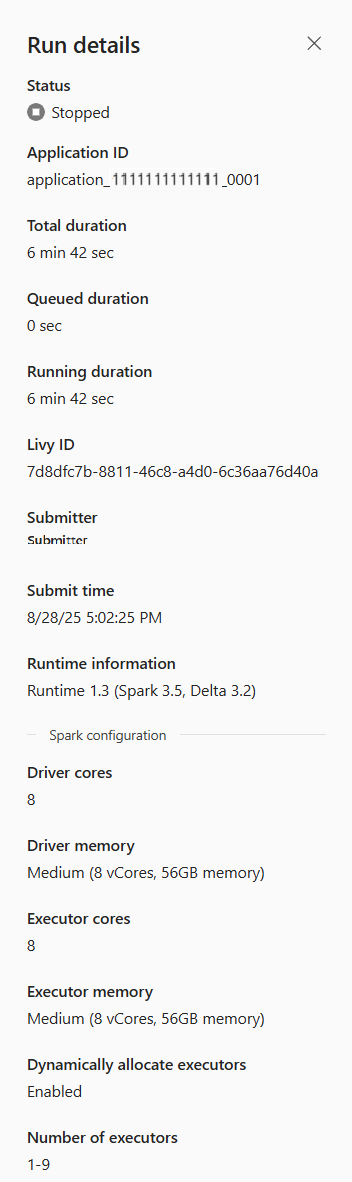
Spark job summary in Fabric monitoring

Figure 1. Attribute MLV time with job details and DAG reality. Do not treat every NEE warning as a rewrite mandate. Source: Microsoft Learn: Spark detail monitoring.

MLV migration is a program: bronze to silver to gold with gates

· 6 min read
Sai Prudhvi Neelakantam
Senior Consultant, Data Engineering & AI at Evidi

Moving a handful of warehouse views to Materialized Lake Views is a rewrite. Moving hundreds is a program. Teams that treat the long tail like a weekend notebook usually discover dependency order the hard way: gold breaks, silver thrashes, and bronze shortcuts were never registered as the real contract.

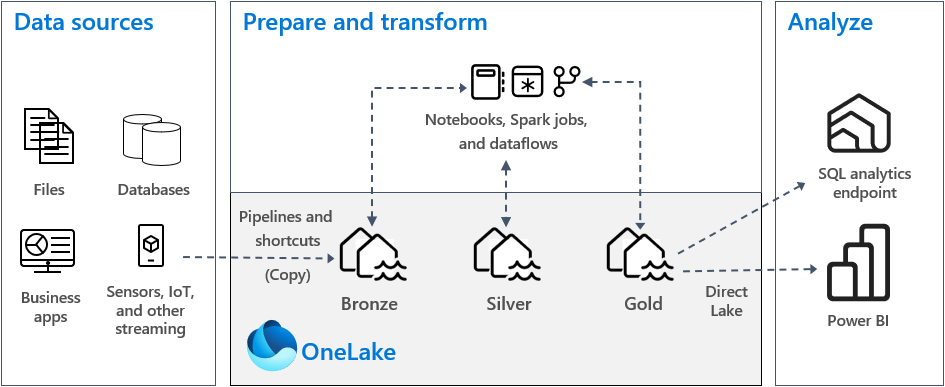
Frame the work as bronze to silver to gold with gates. Count the estate. Order by dependency. Prove a representative POC. Then convert with per-view notebooks so blast radius stays local. Success is parity plus runtime, not "the portal shows an MLV."

OneLake medallion lakehouse architecture example

Figure 1. MLV migration is a program across bronze, silver, and gold. Gates belong between layers, not as a weekend cutover wish. Source: Microsoft Learn: medallion lakehouse architecture.