
Key takeaways
- cutovers need tiered reconciliation: rows, then keys, then column aggregates.
- Compare methods are type-aware, with tolerances written per column.
- One checklist row per column (owner, method, sign-off) is mandatory for gold.
- Validation jobs emit machine-readable results plus bounded mismatch samples.
- Keep those artifacts as release evidence beside the MLV definition.
- Rerun the harness on material MLV changes, not only on first cutover.
A migration checklist that only compares row counts will greenlight wrong totals, wrong dates, and wrong statuses. Row counts catch catastrophic drops. They miss the quiet CAST that turns decimals into floats, the null that became empty string, and the column that silently defaulted.
Push MLV cutovers to per-column tables and type-aware aggregates. Borrow the tiered reconciliation classical data migrations already trust: rows, then keys, then column aggregates. Automate it. Treat the artifacts as release evidence, not as a screenshot buried in chat.
Named model: rows → keys → column aggregates
- Rows: counts and freshness windows answer whether volume disappeared. Smoke only.
- Keys: presence, duplicates, and orphans answer whether the same entities arrived. Stop here on hard fails.
- Column aggregates: type-aware sums, null rates, and distributions answer whether values still mean the same thing.
- Checklist: each column gets owner, compare method, tolerance, last result, and sign-off.
- Contract: semantic drift hides in columns. Validation that cannot name a column cannot protect a cutover.
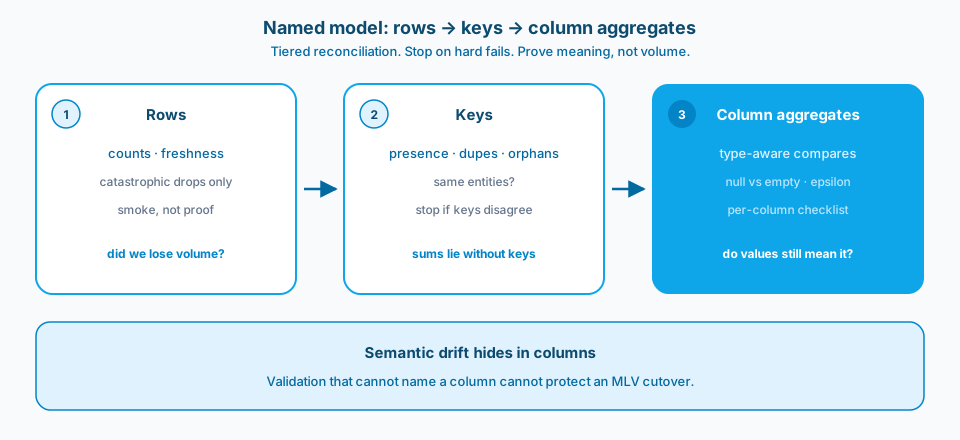
Figure 1. Rows catch catastrophes. Keys catch missing entities. Column aggregates catch the quiet CAST that breaks totals. Run them in order and stop on hard fails.
Context and constraint
A common failure: a cutover matches on rows and fails on a measure that sums a decimal column the MLV widened into approximate floats. Downstream consumers do not care that Spark finished early. They care that two totals disagree by enough to start an argument.
Tiered reconciliation exists because each tier answers a different question. Rows ask "did we lose volume?" Keys ask "do we have the same entities?" Column aggregates ask "do the values still mean the same thing?" Type-aware compares catch float versus decimal and null versus empty mismatches that equality on strings will paper over. One checklist row per column makes ownership and sign-off possible. Screenshot QA is not evidence.
Figure 2 is the Learn surface for MLV data quality reports. Platform checks help. They do not replace a written column contract with owners and tolerances.
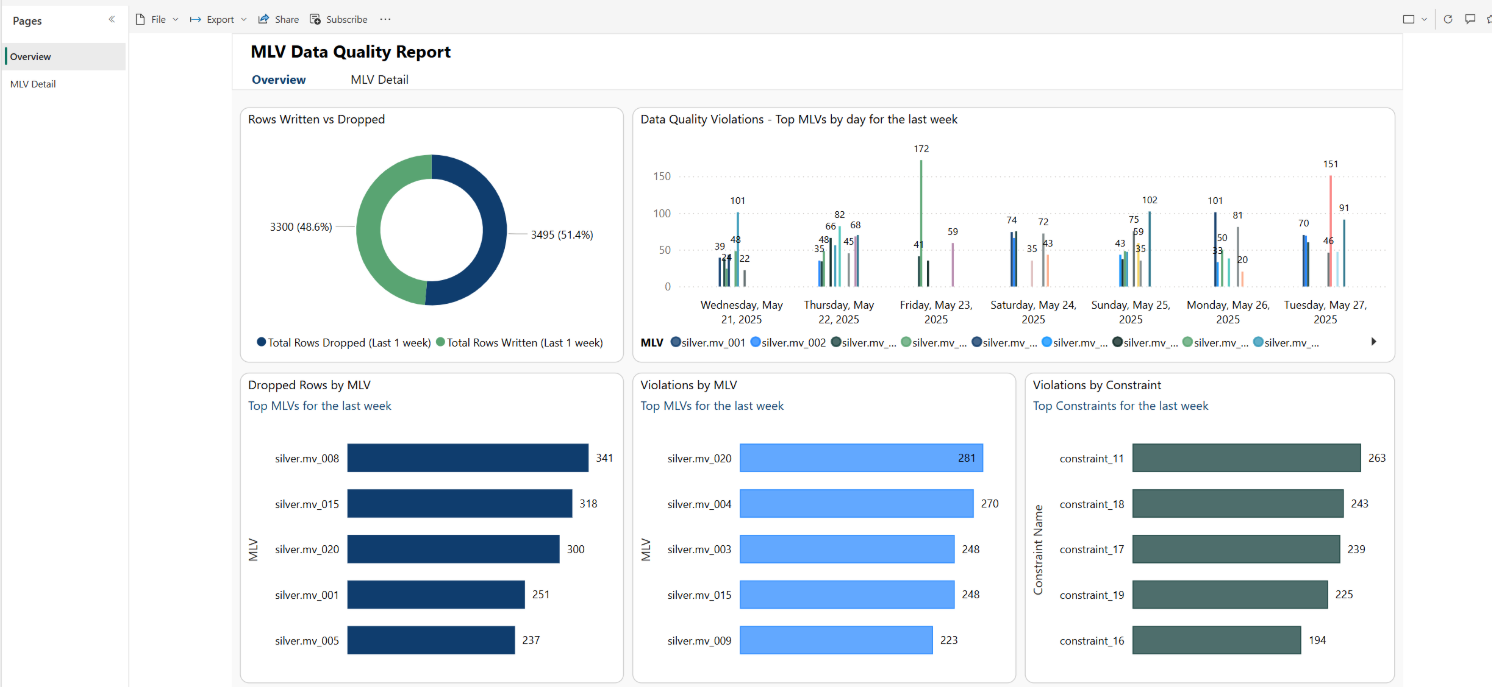
Figure 2. Row counts catch catastrophes. Column aggregates and quality reports catch the quiet CAST that breaks totals. Source: Microsoft Learn: MLV data quality reports.
Figure 3 is the detail surface. Treat per-column reconciliation outputs as release evidence for MLV cutovers, not as optional notebook scratch.
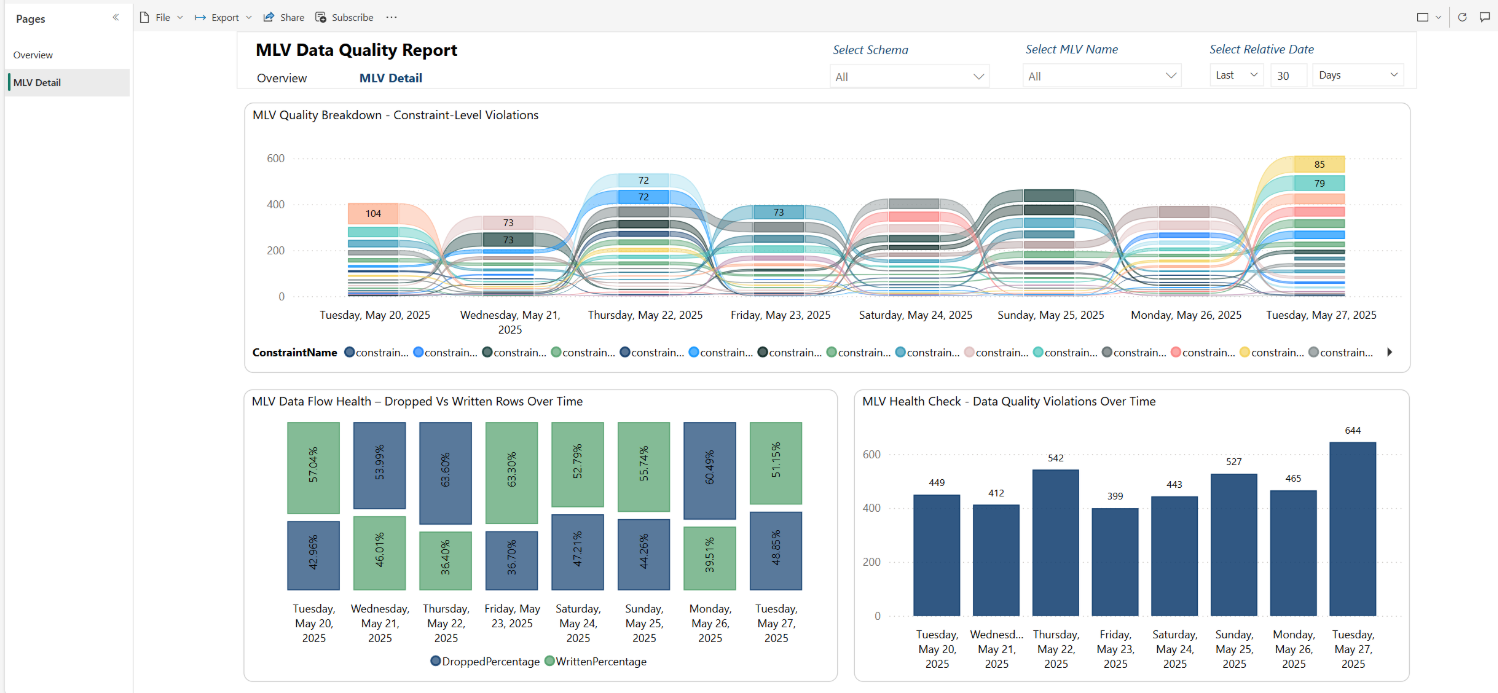
Figure 3. Treat per-column reconciliation artifacts as release evidence for MLV cutovers, not optional notebook scratch. Source: Microsoft Learn: MLV data quality reports.
1. Run tiers in order and stop on hard fails
Start with row counts and freshness windows. Then compare business keys (presence, duplicates, orphans). Only then run column aggregates and distribution checks. If keys disagree, column sums will lie about why. Stopping early saves analyst time and prevents false comfort from "totals look close."
2. Make type-aware compares mandatory
Decimals, floats, timestamps, and strings need different tolerances and null semantics. Empty string versus null is a product decision, not a Spark curiosity. Encode expected types from the contract and fail when the MLV publishes another type "because it still sorted." Floating compares need explicit epsilon or decimal quantization you can defend in review.
3. One checklist row per column
Each column gets owner, compare method, tolerance, last result, and sign-off. Wide tables stop being a vibes exercise. Reviewers can ask who accepted residual risk on a fuzzy float instead of hoping someone remembers. Missing checklist rows are unfinished work, not optional polish. Figure 4 is that row made visible.
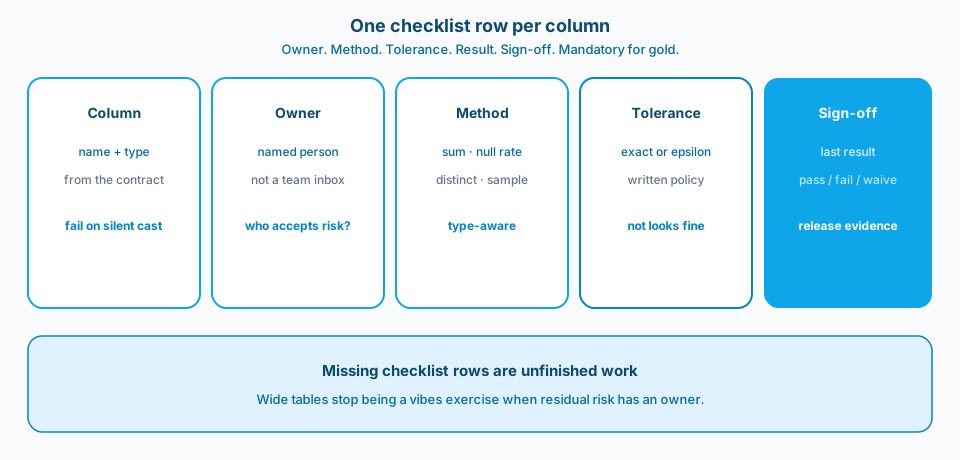
Figure 4. One checklist row per column. Owner, method, tolerance, and sign-off turn residual risk into something a reviewer can name.
4. Automate in analyst scripts, not slide decks
Notebooks or jobs should emit machine-readable results: pass or fail, deltas, sample failing keys. Humans interpret exceptions. Humans should not retype counts from two query windows into Excel every Friday. Automation also means you can re-run after a "tiny" MLV edit without heroics.
5. Keep sample mismatches next to aggregates
Aggregates tell you something is wrong. Samples tell you what. Persist a bounded set of disagreeing keys per failed column for triage. Without samples, every failure becomes a research project. With samples, you see the CAST or join bug in minutes.
6. Store validation artifacts as release evidence
Attach outputs to the release record the same way you attach pipeline run ids. Auditors and future you will ask what was compared on cutover day. Chat screenshots age poorly. Versioned result files next to the MLV notebook age honestly. Figure 5 is the attach path.
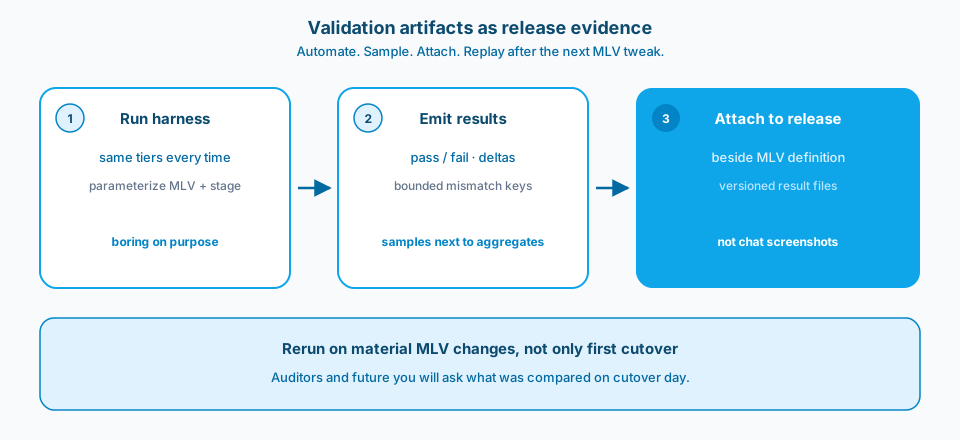
Figure 5. Run the harness, emit pass or fail with bounded samples, attach the files beside the MLV definition. Rerun when the MLV changes.
Building a harness people will actually run
Keep the harness boring: same input snapshots, same tier order, same output schema every run. Parameterize MLV name and stage. Publish a one-page how-to in the repo so on-call is not reverse-engineering your notebook from May. If the harness takes an hour to start, people will skip it under schedule pressure. Optimize for reruns. Cache baseline extracts when the warehouse side is expensive, and record which baseline snapshot you used so arguments stay about data, not about which Tuesday.
What "close enough" must mean in writing
If two decimal sums differ by a rounding policy you accept, write the policy next to the column. "Looks fine" is not a tolerance. Prefer comparing quantized values (for example decimals to two places) over hoping float equality will behave. When a column is intentionally non-deterministic (timestamps of processing), exclude it from parity or compare on business-effective times only. Exclusions are allowed. Silent exclusions are not.
Failure modes
Rows-only green. Volume matches; totals do not.
Stringify everything and diff. Types and nulls disappear into text coincidence.
One giant "data quality" score. Nobody knows which column failed or who owns the fix.
Manual screenshot QA. Unrepeatable, unreviewable, gone after the meeting.
Aggregates without samples. Endless debates about whether the harness is wrong.
Validating once at cutover. Drift returns the next MLV tweak; the harness must be reusable.
What to copy / what not to copy
Copy
- MLV cutovers require tiered reconciliation: rows, keys, column aggregates.
- Compare methods are type-aware with documented tolerances.
- A per-column checklist with owner and sign-off is mandatory for gold (and recommended for silver).
- Validation jobs emit machine-readable results plus bounded mismatch samples.
- Artifacts are retained as release evidence beside the MLV definition.
- The harness is rerun on material MLV changes, not only on first cutover.
Do not copy blindly
Column-level validation costs compute and authoring time. Wrong cutovers cost trust. Tight tolerances create noise on legitimate float columns; document epsilons per column instead of global looseness. Per-column ownership politics can stall sign-off. That stall is cheaper than unsigned production drift. Automating samples needs PII care; hash or restrict columns that leave the .
Primary references: MLV data quality reports on Microsoft Learn, plus classical migration testing patterns for reconciliation. Pair platform tooling with a written column contract so "green" means something specific.
Validate column by column, with types and owners and artifacts you can replay. MLV cutovers stop being faith-based the moment the checklist can name what drifted.